[Research essay] A Tale of Two Deserts : Urban Desert and Operating System (OS) Desert
Somi Sim (Independent Curator, Researcher)
In this text, I aim to examine the relationship between deserts and contemporary urban ecology, a topic that I have been researching since last year, and at the same time, to look into the realities of the geopolitical economy that operate behind the desertification process.1 By cross-tracing hints of the desert observed in urban space, ecological crisis, cultural experience, and in the digital world, I attempt to interpret desertification that replicates itself in the planetary, physical, and non-physical realms from a cultural research perspective.
# Desert Story 1: Burning Earth and Urban Desert
Birds flying across the park crash into glass and fall:
This is where birds, suffocated by the city’s black smoke, moan.
Pessoa predicted. Parks are a human mistake.
Even birds fly away from the smoke.
People can’t avoid it.
The last sanctuary left for humanity in an era of no resort is
Urban desert and OS desert.2
When the city was boiling with a heat wave well over 40 degrees, news that was updated in real-time warned against going outside in the afternoon. In the Korean sense, it is an emergency alert. The range of disasters covered are fire, natural disasters, infectious disease, heat waves, crimes, protests, fine dust, typhoons, heavy snow, etc., and they have become alerts and warnings that frequently unsettle daily life. It is summer, when the greenery should be at its peak, but fallen leaves burnt by the scorching sun and drought sweep through the city like sandstorm, and the smell of something burning fills the streets. With a sweltering heat rising under the roof, I, unable to stay in the suffocating room that absorbs the sunlight, went out into the street. The place I went to escape the city heat that sweltered with asphalt and concrete was a nearby park. In the summer, when many city dwellers escaped the heat wave to various vacation spots in the countryside and the beach, the city was becoming a drying wasteland for those who stayed. In the park, people who came to escape the heat wave were under the shade of the trees. These are mainly immigrant women and children, or people who cannot go on a summer vacation. People who stayed out of the heat until sunset didn’t leave until they heard the whistle that closed the park. Trees were the only refuge for people in vulnerable housing situations who were exposed to the heat. This is the scene of Paris, France in July 2022: people were able to return to their homes only after darkness set in the city.
When cities were burning with heat waves, energy shortages spread across Europe, and trains crossing borders stopped mid-way due to power outages. Machines could not withstand the power overload from a spike in consumption. Trains were halted for nearly four hours, and there was a power outage midway between the two countries, with passengers unable to move, because overheated train tracks exceeded 55 degrees. Last year was recorded as the deadliest year of the climate crisis in Europe, with more than 20,000 people dying due to heat waves. In South Korea, torrential rain flooded many parts of the urban ecology, paralyzing daily life, and a terrible tragedy occurred to a family living in a semi-basement housing. On the record-heavy rainfall in 115 years, the foreign media cited director Joon Ho Bong’s movie, Parasite, as a reference and focused on the reality of semi-basement housing in South Korea, which has become the living situation of many vulnerable populations of climate disasters. As unexpected ecological disasters such as heat waves, fires, desiccation, heavy rains, floods, and earthquakes become more prevalent and urgent, international treaties are being signed globally to slow down developmentalism, marketism, urbanism, extractivism, and consumerism and shift to degrowth policies, with little tangible impact. In April 2023, less than a year later, Spain experienced dryness and extreme heat reaching 39 degrees, much earlier than last year. Compared to last year, desertification has moved a step sooner and closer.
One of the ecological crises in the form of a flaming catastrophe in recent years is the large-scale forest fire in California. The wild fire, which filled people’s screens around the world with horrifying red flames that burnt forests and land the size of Gangwon province, was a grim disaster occuring around the same period of devastating droughts across Europe and floods in South Korea. Climate desiccation, which is the cause of the fire that lasted for almost three weeks, is a major issue of the ecological crisis that Mike Davis noted to demonstrate the seriousness of the situation through various articles, lectures, and interviews. Exposing the unequal structure and exploitative reality of capitalist cities since 1990, Davis has repeatedly emphasized in the following decades that disasters of the Anthropocene, such as forest fires, earthquakes, and desertification, have become a threat greater than nuclear war. Born into a working-class family in southern California, Davis, who spent his entire life unmasking how capitalism and reckless urban development have destroyed life, laborers, and the ecosystem, focused on the issue of global desertification.
“But we’ve passed the tipping points in so many ways, and we’re doing so many of the wrong things. It’s not just global warming, and drought, it’s the fact that two-thirds of the new homes built in the American west are in high fire-hazard areas, and the Democrats refuse to talk about a moratorium on construction or even rolling back construction in the urban-wildlife interface. It’s easier for politicians to say they’re supporting electric vehicles. Greenwashing has reached a disgusting extent. Our ruling classes everywhere have no rational analysis or explanation for the immediate future. A small group of people have more concentrated power over the human future than ever before in human history, and they have no vision, no strategy, no plan.”3
As in his interview, Davis has strongly criticized the suburban housing development policy that spread indiscriminately in areas with high fire risk as a cause of the rapidly increasing aridity, desertification, and forest fires in California and demanded drastic changes in urban development practices that are currently driven by collusion with real estate agents. He further explains that energy consumption in urban buildings for heating, cooling, etc. currently exceeds 40% of carbon emissions with urban industrial facilities and transportation exceeding 35%, and identified the anti-climate global expansion of megacities as the main culprit in destroying climate stability in the Holocene. In his book, The Coming Desert, Davis treats desiccation not as a natural phenomenon but as a man-made result of the relationship between urban civilization and climate crisis from a geopolitical economic perspective4. In the same work, he uncovers how the aridization of the Eurasian continent, first known in the 1870s, has worsened into the current climate crisis with incessant human interventions such as imperialist colonial plantation agriculture in the 18th century and the subsequent industrial revolution. Tracking the remains of the environmental plight from before and after the Industrial Revolution, Davis emphasizes again that drastic changes in the urban environment is the only answer to the expansion of global desertification. He argues for an urgent global revolution that reexamines the current urban ecosystem that exacerbates inequality with urban capital and searches for a residential environment and ecology that reintegrates the lives of workers and the lower-income class population. Speaking of the destruction of Mediterranean forests, Engels, as quoted by Davis, warns against the current crisis caused by man-made exploitative destruction: “For each such victory nature takes its revenge on us.’”5
# Desert Story 2: New Frontier and the Digital Desert
In reality, however, desert is gaining public familiarity, perhaps to Davis’s mismay. Its popularity is closely linked to digital capitalism, which has hijacked the devastation of the desert to be used to lay the foundation of humanity’s future liberation and potential. Humanity’s desire to construct a new civilization has unraveled like a mirror upon the wasteland image symbolized by the desert. Also embedded is the agenda to flaunt human capabilities and generate new profits through desertification. In today’s era of foretelling the future through the digital, desert relies on what “Californian Ideology”6 in the 90s have promised – capitalist expansion through technological utopia and optimism. The cross between the desert and digital technology resonates with the technological accelerationism that successfully emerged in Silicon Valley, California, a desert city in the West of the United States.

“Rocket boom in the desert,” “Silicon Valley on the savanna,” “Cutting-edge technology blooming in the desert,” “Desert to technology hub,” “Silicon Desert,” “Digital desert hub,” “Technology as an oasis in the desert,” “Silicon Valley as a cultural desert,” “Desert robots,” “Silicon Valley in California, a thing of the past – Silicone Desert in Arizona soon to arrive.”7
The above are some of the desert-themed slogans that were used to promote digital technology. The image of the desert combined with technology transforms into one of a techno frontier, that is, the home of a technological utopia. Founded on technological acceleration, a project that capitalizes on the desert setting the most is Saudi Arabia’s Neom City, which attracted global attention. Neom City fully embraces a cutting-edge smart city plan that appears to come out of science fiction and is known as a project for an eco-friendly city, 43 times the size of Seoul in the middle of the desert. In the initial design stages, the plan was to construct a high-tech industrial complex like Silicon Valley, but its public image was changed to Eco-Smart City, as if taking into account the global consensus around the accelerated climate crisis around 2020. These ecological considerations mean that Saudi Arabia, an oil-producing country, will rid itself of the stigma of being the main culprit of the climate crisis and position itself to become a full-fledged post-oil country. In a simulation video of the city, the scene in which 170 km is instantly crossed through a linear building is not limited to its large-scale buildings. The crux of the Neom City project is not construction, but rather, human-liberating advances that promise an ecosystem in crisis amidst a virtually barren environment with cutting-edge technology. In the meantime, the unethical practices that took place in the “real desert” to build this enormous project are largely unknown. For example, the video shows an empty desert as an endless wasteland and a place devoid of any organisms. The desert, as a frontier, is just a white drawing board to artificially replicate the human-centered ecosystem while the actual ecosystem of the desert is not taken into account at all. Rather, reality is concealed in the image of infinite space.

The concealed “reality of the desert” is born out of the inhumane and unethical political and social agenda that hides a history of a forcible expulsion of the indigenous people who had settled there for a long time as a part of the desert ecosystem through punishment, imprisonment, and execution. Sparsely published articles from a few years ago addressed the displacement of tribes being evicted from Neom City’s proposed site and described threats made to the indigenous people, forced evictions and bloodshed. One indigenous resident explains, “Neom is being built on our blood and bones,”8 and summarizes what is really being exploited, mined, removed, destroyed, and becoming extinct in the desert today. While Neom City uses cutting-edge technology to restore the ecology, circulate energy and pursue automation, the implementation is at the cost of expelling the indigenous people and is founded on the systems of class-based segregation with closed community centered on the upper class and tourists, polarization of socio-spatial access, and surveillance. This city, built in the middle of the desert, aims to erase the traces of indigenous people who formed the history of the desert before Saudi Arabia and to rewrite the story of the desert with a narrative written by capital. Despite the unethical and undemocratic process that is rife with human rights violations, the global economy is excited about Neom City’s mega-development plan, as seen during Crown Prince Mohammed bin Salman’s visit to South Korea late last year.
Its history as a new frontier followed the wasteland mythology of the United States’ nation-building, combined with the greenwashing strategy of today’s world’s largest oil producer and carbon emitter. Neom City, which boasts carbon-neutrality and cutting-edge ecological technology, is merely a replica of various eco-smart cities and technological utopias designed from the perspective of “disgusting greenwashing,” as Davis puts it. Considering that construction accounts for 40% of the total carbon emissions, Neom City, which creates 40 times the size of a city the size of Seoul, raises great concerns that the construction process alone will not only taint the country’s reputation as a carbon emitter, but also become a fatal ecological destroyer. According to a 2020 statistic, per capita carbon dioxide emissions ranks China, the United States, India, Russia, Japan, and Iran, with South Korea at 8th and Saudi Arabia at 9th. Interestingly, statistics on cement consumption by country are also similar with South Korea at 11th and Saudi Arabia at 10th. The stigma of being a construction republic, created by South Korea’s high level of capitalization of urban spaces since the 1960s to the present, is not limited to the issue of standardized residential areas and the construction industry. The development methodology of urban space, which has been replicated around the world, is said to be the main culprit in exacerbating today’s ecological crisis. However, when looking at various statistics related to the climate crisis, one cannot help but wonder about South Korea, which ranks high in the list of ecologically destructive countries even without oil, cement, or deserts. This discrepancy may not be surprising as South Korea, a country with scarce mining resources, produces cement with waste composites and sees the deserts frequently in the process of urban development that ruins everyday lives. When we look at city-by-city carbon dioxide emissions statistics for 500 cities, we see shocking results. Seoul occupies the dishonorable first place9 with Guangzhou, New York, Hong Kong, Los Angeles, Shanghai, and Singapore following in this order. This ranking has quite similar results to statistics on megacities around the world. These numbers reinforce the climate crisis and desertification caused by megacities in capitalist globalization, which Davis critically reflects on.
Having developed a human-centered myth of the frontier, development and expansion, and the advancement of civilization on a blank slate, humanity stands at the crossroads of seeing the challenge of the crisis of desertification in two axes – driving force of the neoliberal era and digital technology. Neil Smith, who traces the history of gentrification with the order of global urban reorganization, explains that American urban development was transforming “Indian Country” into a “new frontier” by turning it into dangerous land, wasteland, and unexplored land. In other words, he unmasks the capitalist desires contained within.10 In particular, he critically analyzes the exploitation of the built environment under the disguise of the “new frontier” motif and the organization of current urban space with particular agendas driven by class and racial goals. The images of brave urban pioneers and modern people who tamed the wilderness are linked not only to gentrification in the neoliberal era but also to a technological utopian vision, as in the case of Neom City. Establishing itself as a black oil money utopia with the imagery of American expansionist history of wilderness and frontier, the initiative closely aligns with the exploitative desires of many corporations that promote technological capitalism. Another example is Elon Musk who is a successful figure who symbolizes a phantasmagoric desire of technological accelerationism with his plans to reach Mars, “Space X”. As such, humanity’s endless desire to conquer space is captured also in the image of a dream reaching a new colony through the desert. Today, after the collapse of the former Soviet Union, the ideological utopia has disappeared, and neoliberal capitalists are competing to conquer Mars, extending the desert into the future as a new colony and object of acquisition.
The apocalyptic landscape that was taken as a subject of black comedy just half a century ago has now become a reality. Shooting Star (1941-42), a series from the legendary comics, The Adventures of Tintin (1929-1976) from almost a hundred years ago that imagined people and the world of the future, is about the end of the world caused by a collision with a meteor. As a meteor rushes toward the Earth, the world becomes so hot that the asphalt on the road melts, and Tintin, unable to set foot on the melting ground, urgently shouts to people, “It’s the end of the world.” The imaginary scenario in which the Earth is melting from high heat is similar to today’s climate crisis, in which glaciers are melting, landslides are frequent, the ground cracks, and rivers overflow and swallow up houses. In the cartoon, thanks to the efforts of Tang Tang and the scientist, the Earth escapes danger as the meteor fragments head towards the sea, but in today’s world where fantasy has become a real disaster, alternative thinking has become difficult to even imagine.
The narrative of humans thriving in a dystopia of a century ago existed as heroic characters in various films until the early 1990s. As the years passed, it became a mixture of not only genres but also notions of time in various films, best known by those of Marvel Studios. The concept of time as a mixture of everything that is neither the past, present, nor future, touches on the impossibility of imagining a future like a cultural plague. To borrow the expression of Mark Fisher who noticed the decline of radical imagination in arts and culture, today’s creation continues through “a hellish rhizome in which any part can potentially collapse into any other.”11 However, in reality, we cannot go back to the past or travel in time as in movies, so disasters that worsen every day become a spectacle that floods our daily lives and is shown through various media. As the boundaries between users and providers have become blurred with the easily accessible web, images of disaster have become memes in the digital age, appearing as catastrophic ghosts that repeat themselves as they wander the vast OS desert. Alienation from reality through replication is shown more dramatically in machine creativity brought about by the recent commercialization of artificial intelligence, ChatGPT. The algorithm in which humans ask questions and technology creatively responses is in fact a method of infinite replication, editing, and pasting the controls stored in the data set only to produce “remixed way of thinking”12 as its answer. All correspondences are the result of remix, hybrid, hybridization, combination, and recombination, and seem to further advance the technology of reproduction. In the era of artificial intelligence, the original will remain only as a set of numbers in the midst of countless statistical data. In other words, all past statistics become resources for artificial intelligence and are reproduced and displayed as a “hellish rhizome structure,” to use Fisher’s language mentioned earlier. It is a time when critical reflection, intervention, and solidarity that resists are urgently needed to understand how the accelerated digital world deserts, alienates, and separates us from reality.

If you are reading this on your computer screen, I recommend that you take a moment to go back to your wallpaper. The images commonly seen on computer or smartphone screens, which usually have grasslands, sky, and desert as their default wallpapers, contain the infinity, vastness, and blankness of the screen. While I was writing this one day, I was looking at my computer’s wallpaper and realized that the surface of the digital device on which I spend most of my day was disguised as an image of a desert. This desert, called Mojave in the Mac OS, is named after a desert in California, and the wallpaper is known to be an image of an actual desert. If you open the map application and go to Mojave Desert, you can take a look at the geopolitical conditions of it being in the middle of an empty plain in southeastern California. When you zoom in and get closer within the map, the first name that appears is “Mojave Air and Space Port.”
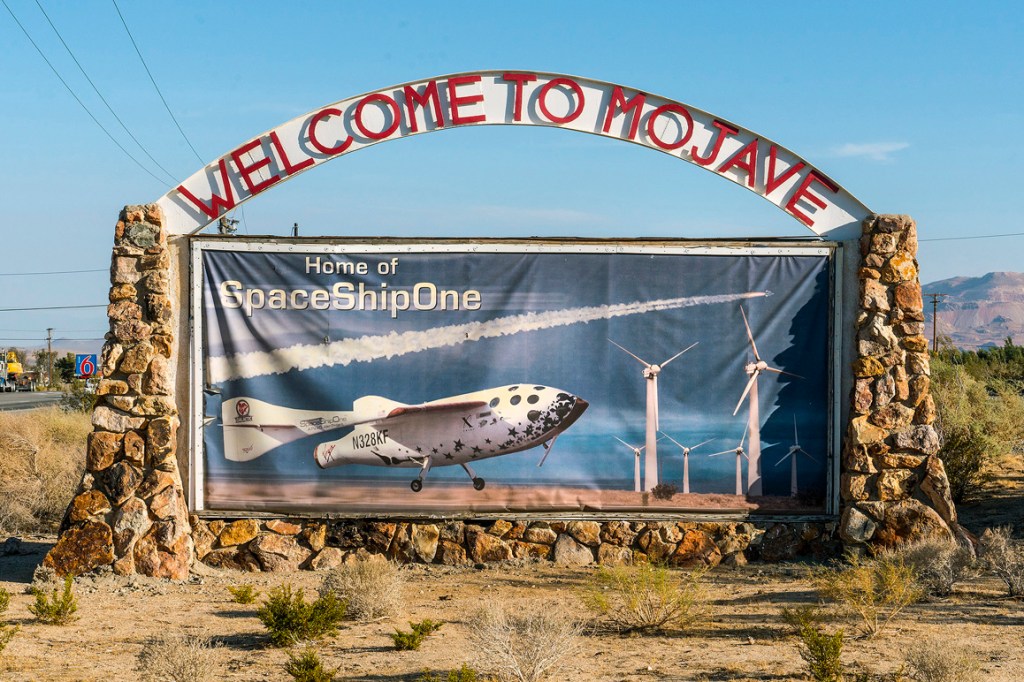
In fact, Mojave Desert is where the space experiment base station is and where rocket and satellite experiments are actively conducted from around the world; it has been called a futuristic place where various space industry startups gather to realize humanity’s desire to reach Mars. There was also a federal air force facility called “Plant 42,” and according to a recent Time magazine article, this is where the next-generation stealth bomber, notoriously known as the most ruthless killing machine during wartime, was secretly produced.13 The reality behind the image of a peaceful desert seen as an OS background is actually repeated explosions for rocket launches and production of murderous robot weapons made possible by cutting-edge technology. If so, one wonders, the wallpaper image is neither the actual desert in California nor a photo-replicated desert. In this sense, we cannot help but recall the welcoming speech given by Morpheus to Neo in the movie “Matrix,” borrowed from the title of Slavoj Zizek’s book when he says, “Welcome to the Desert of the Real!” The infinitely replicated desert’s reality is built on a catastrophic future disguised as a technological utopia, a desert of the future, and shattered bones and flesh. As a desert subjugated by capitalist colonial thirst to terraform and conquer, we find it planted on the OS wallpaper.
—————————————————————————
1 This research was derived as a manuscript during the preparatory study supported by Arts Council Korea for the exhibition Urban Desert / OS Desert (tentative title) scheduled to be held in 2025. This essay was revised and supplemented after the original text was included on the Seoul Museum of Art’s SeMA Coral website.
2 The above text is a collection of pieces of ideas written down in the summer of 2022, rearranged into the structure of the poem while developing the original manuscript. These linguistic fragments are scattered throughout: in the parks visited to escape the heat wave, in front of the death of birds, in reading Fernando Pessoa’s pessimistic existentialism, in the fumes spewing out of the incinerator at the outskirts of the city, and in the OS that captures our gaze from reality while I sit in front of the monitor’s wallpaper. In the process of writing this manuscript, they came together to be interconnected.
3 Davis, Mike. “California’s ‘prophet of doom’, on activism in a dying world: ‘Despair is useless,’” The Guardian, August 31, 2022. www.theguardian.com/us-news/2022/aug/30/mike-davis-california-writer-interview-activism
4 Davis, Mike. “The Coming Desert: Kropotkin, Mars and the Pulse of Asia.” New Left Review 97, no. 1 (January–February 2016), 23–43. Translated by Minseok Ahn. Paju: Changbi, 2020. 241-266.
5 Ibid., 247
6 Barbrook, Richard, et al., “California Ideology,” Culture/Science, No. 10, Fall 1996, 45-67.
7 Google and Naver search. (Accessed April 20, 2023)
8 Michaelson, Ruth. “It’s being built on our blood’: the true cost of Saudi Arabia’s $500bn megacity.” The Guardian. May 4 2020. https://www.theguardian.com/global-development/2020/may/04/its-being-built-on-our-blood-the-true-cost-of-saudi-arabia-5bn-mega-city-neom
9 Ranking information is based on the latest statistics as of 2023, and detailed information can be found on the following website. “Carbon dioxide emissions per capita by country” https://worldpopulationreview.com/country-rankings/carbon-footprint-by-country
Cement consumption statistics by country www.cemnet.com/Articles/story/171972/uncertain-times.html
Carbon dioxide emissions statistics by city www.citycarbonfootprints.info.
10 Smith, Neil. The New Frontier of the City: Gentrification and Urban Dispossession. Translated by Dong Wan Kim, Paju: Dongnyeot. 2019. 36-43.
11 Fisher, Mark. The Weird and the Eerie. Translated by Hyeonju Ahn. Gufik Publication. 2019. 60-69.
12 The analysis of this refers to that of Professor Kwangseok Lee, who described generative artificial intelligence as an “automated creative remix machine” during the meeting below. Sang-gyu Kim, Yangachi, Unmake Lab, Tae-hoon Lim, Jin-seung Jang, et al., “Special Meeting: Crisis and Possibilities of Art Surrounding AI Creativity,” Culture/Science No. 114, Fall 2023.
13 Exclusive: The Making of the U.S. Military’s New Stealth Bomber, TIME, 2022.11.3 https://time.com/6238168/b-21-raider-bomber-us-military-exclusive/
 URBAN DESERT / OS DESERT