주제: 공공사막 (Public Desert)
전시 사전 연구로서 진행된 <공공사막(Public Desert)> (2025년 전시 예정: <도시 사막/OS 사막>)은 일상으로 더 가까이 다가온 기후위기와 황폐화된 도시 생태에 관심을 두면서 기획이 되었다. 모더니즘 기반의 개발주의 도시 계획이 초래한 모순, 현재 전 세계 도시가 당면한 여러 재난의 상황은 오늘날 도시환경에서 인류가 지키고 보존해야 하는 공유자원에 대한 경각심과 변화의 움직임을 촉구하고 있다. 이 전시는 근대식 도시개발로부터 황폐화되어온 도시환경과 이로부터 저항할 수 없이 사라져온 생태적 각성을 기반으로 한다.
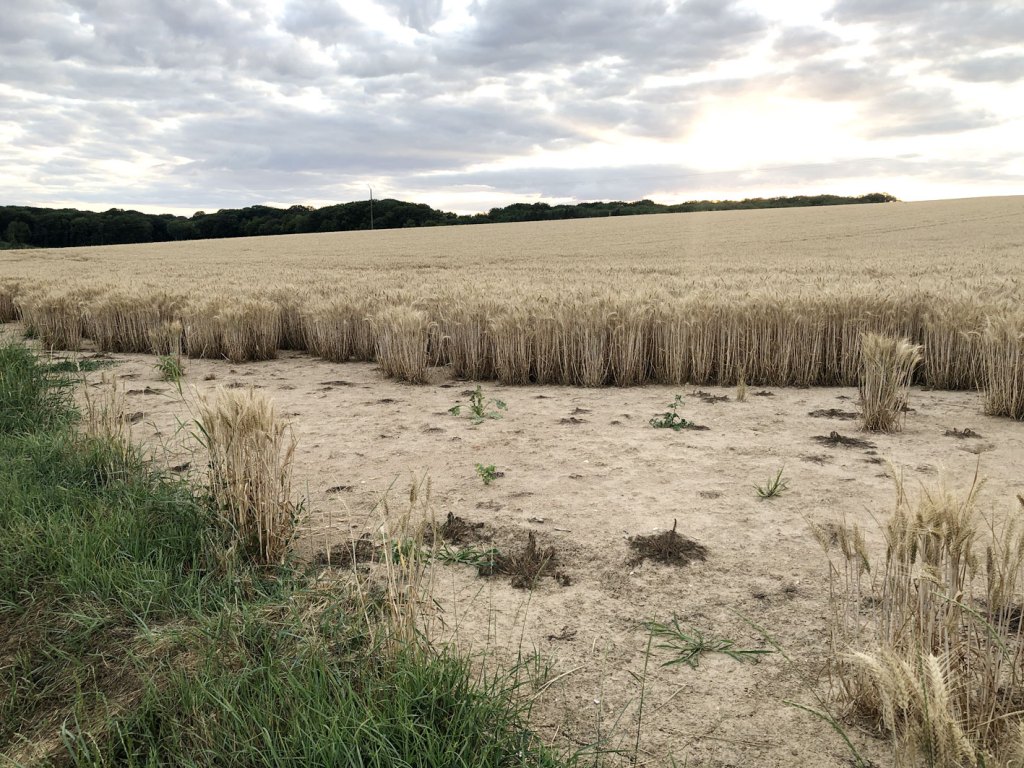
현실에서 사막의 사전적 의미는 세 가지 정도로 압축된다. 첫째는 강수량이 적어 건조해진 지역을 말한다. 대표적으로 알려진 열대 사막 외에도 해안 사막, 내륙 사막, 한랭지 사막이 있다. 둘째는 인간의 가치 판단에 의해 방치되거나 버려져 온 장소를 뜻한다. 셋째는 야생으로서 경작되지 않고 사람이 살지 않는 지역을 칭한다. 이번 전시의 리서치에서는 작년부터 관심을 두고 주제로서 사막이 동시대 도시생태와 맺는 관계를 검토함과 동시에, 새롭게 등장하는 사막화의 배후에서 작동하는 지리정치경제학적 실재를 들여다보고자 한다. 도시공간, 생태위기, 문화경험, 디지털의 영역에서 지속적으로 목격된 사막의 흔적을 교차 추적함으로써, 오늘날 행성적·물리적·비물리적 영역을 돌고 돌면서 복제되어 가는 사막화에 대한 문화연구적 독해를 참여작가, 참여연구자 및 여러 협업자들과 시도할 것이다.
도시생태계와 사막의 은유는 이탈리오 영화감독인 미켈란젤로 안토니오니의 영화 <붉은 사막(Red Desert)>(1964)에서 영감을 받은 것으로, 고도화된 산업 문명에 의해 황폐화되어가는 도시적 삶의 황량함을 부각시키고, 거듭된 재난의 황폐함마저도 논쟁적인 개발의 수단으로 삼는 인류의 모순을 투영한다.
제목이 함의하듯 이 전시는 인류의 역사 속에서 자본주의가 착취해온 자연(토양, 공기, 물, 자원, 인간 등)의 황폐화에 대한 관점을 비평적으로 점검함과 동시에, 도시개발의 과정 속에서 축소되고, 망각되고, 강탈되어간 도시생태계의 현주소를 ‘사막’의 성질로서 재해석해보고자 한다.
특히 동시대 도시환경의 황폐화와 관련하여 전세계적으로 자행되는 착취적 경제, 금융위기에 대항하는 정치 미학적 활동에 집중하며, 동시대 도시생태가 논쟁적으로 황폐화 되어가는 시각적 은유로서 사막화 과정을 위급함, 절멸의 현상을 다룰 것이다. 2025년 전시기획의 준비 과정인 본 연구에서는 도시/생태/인간/디지털/문화경험에 걸친 폐허의 과정에서 발생하는 물질적/비물질적 사막화의 과정에 내포된 시지각적 영향 관계를 참여작가/참여연구자와 탐색해나가며, 이 웹사이트를 통해 그 사유의 과정을 공유한다.
기획 : 심소미
협력 : 줄리앙 코와네
참여 작가 : 최고은, 황문정, 무진형제, 리트레이싱 뷰로, 박찬국 외 10인
연구자 : 김상민, 권범철
후원 : 한국문화예술위원회 시각예술창작산실
*본 전시 사전 연구는 2023년 한국문화예술위원회 시각예술창작산실(창작의과정#시각예술) 기금을 통해 진행되었다.
Public Desert / Research Overview
Pre-exhibition research, Public Desert (for the prospective exhibition in 2025: Urban Desert/OS Desert) was born around the interests of the climate crisis and the devastated urban ecology that have become more and more acute in our daily lives. The ironic condition caused by modernism-driven developmentalist urban planning and the various disasters that global cities are currently facing are calling for awareness and a movement for change on the shared resources that humanity must protect and preserve in its urban environment. In this context, this exhibition is based on the urban environment that has been destroyed by modern urban development and the ecological awakening that has faded defenselessly.
The dictionary definitions of desert can be summarized in three ways. The first definition refers to areas that have become desolate with low rainfall. In addition to the well-known tropical deserts, there are coastal deserts, inland deserts, and cold deserts. The second refers to areas that have been neglected or abandoned due to human judgment of its worthlessness. The third is wilderness: areas that are not cultivated and inhabited. In this text, I aim to examine the relationship between deserts and contemporary urban ecology, a topic that I have been researching since last year, and at the same time, to look into the realities of the geopolitical economy that operate behind the desertification process.1 By cross-tracing hints of the desert observed in urban space, ecological crisis, cultural experience, and in the digital world, I attempt to interpret desertification that replicates itself in the planetary, physical, and non-physical realms from a cultural research perspective.
This project focuses on the political aesthetic programs that challenge the global exploitative economy and financial crises in relation to the decay of contemporary urban environments and
presents desertification process as a visual metaphor for the controversial decrepitude of contemporary urban ecology and as a phenomenon of exigency and extinction. The analogy of the urban ecosystem and the desert was inspired by Italian film director Michelangelo Antonioni’s film Red Desert (1964) to highlight the desolation of urban life being destroyed by advanced industrial civilization and to project the contradictions of humanity, which uses even the ruins of recurring disasters as a means of contentious developments.
As the title implies, this exhibition critically examines the perspective on the devastation of nature (soil, air, water, resources, humans, etc.) that has been exploited by capitalism. At the same time, it seeks to reinterpret the current state of the urban ecosystem, which has been reduced, forgotten, and robbed in the process of urban development, borrowing from the characteristics of a “desert.” In this research, which is a preparatory process for the planning of the 2025 exhibition, a number of participating artists (yet to be confirmed) will examine the web of visual and perceptual impacts embedded in the process of material/immaterial desertification that occurs in the ruins of urban/ecological/human/digital/cultural experiences.
1 This research was derived as a manuscript during the preparatory study for the exhibition Urban Desert / OS Desert (tentative title) scheduled to be held in 2025
Curated and researched by Somi Sim
In collaboration with Julien Coignet
Supported by 2023 AKRO Selection Visual Art, Art Council Korea
Participating artists: Goeun Choi, moonjung hwang, Moojin Brothers, Re-tracing Bro, Chankook Park and 10 others
Participating researchers : Sangmin Kim, Beomchul Kwon

 URBAN DESERT / OS DESERT