심소미(독립큐레이터, 연구자)
사막이 은유해 온 황무지 이미지에는 거울처럼 새로운 문명을 건설하고자 하는 인류의 욕망이 전개되어 왔다. 그것은 사막의 황폐화를 인류의 미래적 해방과 잠재력의 토대로서 도구화해 온 디지털 자본주의와 밀접하게 관계한다. 여기에는 사막화를 통해 인간의 능력을 과시하고 새로운 이윤을 창출하고자 하는 의도가 숨겨져 있다. 디지털을 통해 미래를 전망하는 시대가 된 오늘날에 있어 사막은 90년대 ‘캘리포니아 이데올로기(California Ideology)’1가 촉발시킨 기술유토피아와 낙관주의를 통한 자본주의적 성장에 기댄다. 사막과 디지털기술의 만남은 미국 서부의 사막 도시 캘리포니아주 실리콘밸리에서 성공적으로 등장한 기술가속주의와 관련된다.
사막의로켓붐, 사바나위의실리콘벨리, 사막꽃피우는첨단기술, 사막서기술허브로, 실리콘사막, 디지털사막허브, 기술은사막의오아시스와같다, 문화사막으로서실리콘벨리, 사막로봇, 캘리포니아의실리콘벨리는가고아리조나의실리콘사막이온다.2
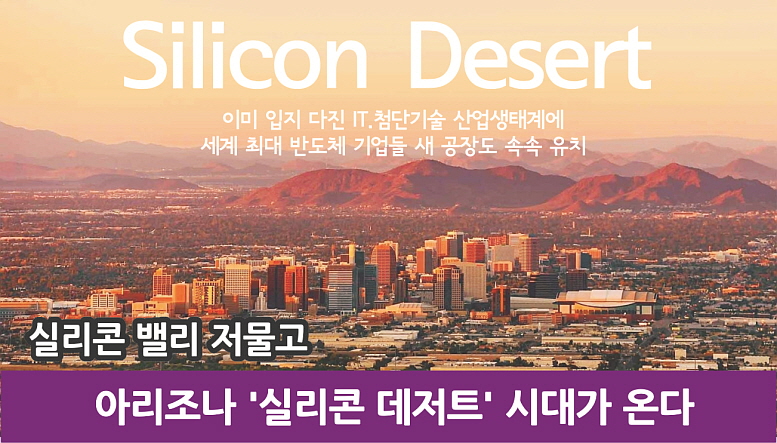
위 문구들은 디지털 기술을 홍보하는 슬로건 중 사막과 관련된 것들을 일부 모아본 것이다. 기술과 결탁한 사막의 이미지는 이를 일종의 테크노 프런티어, 즉 기술 유토피아의 터전으로 탈바꿈 된다. 기술가속주의를 기반으로 하여 사막이라는 배경이 극대화된 프로젝트로는 전 세계인의 이목을 산 사우디아라비아의 네옴시티 계획을 들 수 있다. SF에서나 나옴직한 첨단 스마트시티 계획을 전면화 한, 네옴시티는 사막 한가운데 서울의 43배나 되는 친환경도시 계획으로 알려져 있다. 설계 초기 단계에서는 실리콘밸리와 같은 첨단 산업단지로 계획되었던 것으로, 2020년을 전후로 하여 가속화된 기후위기에 대한 국제적 정세를 고려한 듯 에코스마트시티로 홍보 방식을 변경하게 된다. 이러한 생태적 고려는 오일 산유국인 사우디아라비아가 기후 위기의 주범이라는 오명을 벗고 본격적인 탈석유국가로서의 노선을 향하겠다는 것이다. 네옴시티의 시뮬레이션 동영상에서 170㎞ 구간을 직선형 건물을 통해 순식간에 가로지르는 장면은 거대한 규모의 건축물에 한정되지 않는다. 네옴시티의 핵심은 건설이 아닌 사실상 척박한 환경에서 위기에 처한 생태계를 첨단기술로 구현해 낼 수 있다는 인간 해방적 기술관을 담고 있다. 그러나 이 엄청난 프로젝트를 건설하기 위해서 ‘실재의 사막’에서 벌어졌던 비윤리적 사태는 거의 알려지지 않은 편이다. 홍보 영상에는 끝없이 펼쳐진 황무지이자 아무런 유기체가 없는 장소로서 비어있는 사막이 등장한다. 프론티어로서 사막은 인간 중심적 생태계를 인공적으로 복제하기 위한 하얗게 펼쳐진 도화지일 뿐, 사실상 사막에 누적된 실재로서의 생태계는 전혀 고려되지 않는다. 오히려 현실은 무한한 공간의 이미지에 은폐된다.
은폐된 ‘사막의 실재’는 사막의 생태계에 한 일원이자 역사로서 오랫동안 정주했던 원주민들을 강제추방하고, 처벌과 수감 및 처형 등 비인간, 비윤리적인 정치사회 시스템을 배후에 두고 있다. 몇 년전에 드물게 등장한 한 기사는 네옴시티가 예정된 사이트에서 퇴출되는 부족의 이주 문제를 다루며, 원주민에 대한 위협, 강제 퇴거, 유혈 사태를 다룬바 있다. “네옴은 우리의 피와 뼈 위에서 건설되고 있습니다”3는 한 원주민의 말은 오늘날 사막의 실재에서 착취, 채굴, 제거, 소멸, 멸종되고 있는 것이 무엇인지를 증명해 보인다. 원주민을 내쫓고 세워지는 네옴시티는 최첨단 기술에 의해 생태가 복원되고, 에너지가 순환되고, 자동화를 지향하나, 이 모든 기술의 구현은 상류층과 관광객을 중심으로한 폐쇄형 공통체라는 계급적 분리와 사회공간적 양극화 및 감시 시스템을 바탕에 두고 있다. 사막 한가운데 형성되는 이 도시는 사우디아라비아 이전에 사막의 역사를 형성해온 원주민의 역사를 흔적도 없이 제거하고, 새로운 자본의 역사로서 사막의 이야기를 다시 쓰는데 있는 것이다. 인권 침해가 난무하는 비윤리적, 비민주적 과정에도 불구하고, 작년 말 모하메드 빈 살만 왕세자의 한국 방문처럼 글로벌 경제는 네옴시티의 초대형 개발 계획에 한껏 고조된 분위기이다.

새로운 프론티어로서의 역사는 미국이라는 국가적 건설의 황무지 신화에 이어, 오늘날 세계 최대의 석유 생산 국가이자 탄소배출 국가의 그린워싱 전략과 결합되었다. 탄소중립도시와 최첨단 생태 기술을 앞에 내세운 네옴시티는 데이비스의 표현대로 “역겨운 그린워싱”의 관점에서 설계된 각종 에코스마트시티와 기술유토피아의 복제판일 뿐이다. 건설이 지구상의 전체 탄소배출량은 40%임을 감안해볼 때, 서울 크기의 도시를 40배로 복제 생성하는 네옴시티는 건설 과정만으로도 탄소배출국 불명예 이상으로 치명적인 생태 파괴범이 될 우려를 크게 안고 있다. 2020년 한 통계에 의하면 국가별 1인당 이산화탄소 배출량은 중국, 미국, 인도, 러시아, 일본, 이란을 거쳐 한국이 세계 8위, 사우디 아라비아가 9위를 잇는다. 이와 관련하여 시멘트 소비량 국가별 통계 또한 유사하다. 한국이 11위, 사우디 아라비아는 10위이다. 한국이 60년대 이후로 현재까지 도시공간을 고도로 자본화함으로써 만든 건설공화국이라는 오명은 획일화된 주거공간 문제, 건설 산업적 측면에 국한되지 않는다. 전세계로 복제되어 나간 도시공간의 개발 방식이 오늘날 생태위기를 가속화하는 주범이라는 것이다. 그런데 기후위기와 관련한 각종 통계를 보다 보면, 실재하는 석유, 시멘트, 사막이 없이도 생태 파괴 국가의 상위권에 한국의 상황에 의구심을 품을 수 밖에 없다. 채굴 자원이 부족한 한국에서 시멘트는 쓰레기 합성물로 만들어지고, 사막은 일상을 폐허화하는 재개발의 과정속에서 빈번하게 등장해왔기에 그다지 놀랍지 않을 수도 있다. 500개 도시를 대상으로 한 도시별 이산화탄소 배출량 통계를 보면 충격적인 결과가 목격된다. 서울이 불명예스러운 1위를 차지하고 있다.4 서울, 광저우, 뉴욕, 홍콩, 로스 엔젤레스, 상하이, 싱가포르 순이다. 이 순위는 전 세계 메가시티 통계와도 상당히 유사한 결과를 갖고 있다. 이러한 통계는 데이비스가 비판적으로 성찰한 자본주의적 세계화 속에서 거대 도시들이 초래한 기후 위기와 사막화에 힘을 실어 준다.
1 리차드 바브룩 외, 「캘리포니아 이데올로기」, 『문화/과학』, 제10호, 1996 가을, 45-67 참조
2 구글, 네이버 검색 (접속. 2023.4.20)
3 Ruth Michaelson, It’s being built on our blood’: the true cost of Saudi Arabia’s $500bn megacity, The Guardian, 2020.05.04 참조.
4 각각의 랭킹 정보는 2023년 기준으로 최근의 통계를 기반하고 있으며, 다음의 웹사이트에서 세부 정보를 참조할 수 있다.
국가별 1인당 이산화탄소 배출량 https://worldpopulationreview.com/country-rankings/carbon-footprint-by-country
시멘트 소비량 국가별 통계 www.cemnet.com/Articles/story/171972/uncertain-times.html
도시별 이산화탄소 배출량 통계 www.citycarbonfootprints.info

# Desert Story 2-1 : New Frontier and the Digital Desert
Somi Sim (Independent Curator, Researcher)
In reality, however, desert is gaining public familiarity, perhaps to Davis’s mismay. Its popularity is closely linked to digital capitalism, which has hijacked the devastation of the desert to be used to lay the foundation of humanity’s future liberation and potential. Humanity’s desire to construct a new civilization has unraveled like a mirror upon the wasteland image symbolized by the desert. Also embedded is the agenda to flaunt human capabilities and generate new profits through desertification. In today’s era of foretelling the future through the digital, desert relies on what “Californian Ideology”1 in the 90s have promised – capitalist expansion through technological utopia and optimism. The cross between the desert and digital technology resonates with the technological accelerationism that successfully emerged in Silicon Valley, California, a desert city in the West of the United States.
“Rocket boom in the desert,” “Silicon Valley on the savanna,” “Cutting-edge technology blooming in the desert,” “Desert to technology hub,” “Silicon Desert,” “Digital desert hub,” “Technology as an oasis in the desert,” “Silicon Valley as a cultural desert,” “Desert robots,” “Silicon Valley in California, a thing of the past – Silicone Desert in Arizona soon to arrive.”2
The above are some of the desert-themed slogans that were used to promote digital technology. The image of the desert combined with technology transforms into one of a techno frontier, that is, the home of a technological utopia. Founded on technological acceleration, a project that capitalizes on the desert setting the most is Saudi Arabia’s Neom City, which attracted global attention. Neom City fully embraces a cutting-edge smart city plan that appears to come out of science fiction and is known as a project for an eco-friendly city, 43 times the size of Seoul in the middle of the desert. In the initial design stages, the plan was to construct a high-tech industrial complex like Silicon Valley, but its public image was changed to Eco-Smart City, as if taking into account the global consensus around the accelerated climate crisis around 2020. These ecological considerations mean that Saudi Arabia, an oil-producing country, will rid itself of the stigma of being the main culprit of the climate crisis and position itself to become a full-fledged post-oil country. In a simulation video of the city, the scene in which 170 km is instantly crossed through a linear building is not limited to its large-scale buildings. The crux of the Neom City project is not construction, but rather, human-liberating advances that promise an ecosystem in crisis amidst a virtually barren environment with cutting-edge technology. In the meantime, the unethical practices that took place in the “real desert” to build this enormous project are largely unknown. For example, the video shows an empty desert as an endless wasteland and a place devoid of any organisms. The desert, as a frontier, is just a white drawing board to artificially replicate the human-centered ecosystem while the actual ecosystem of the desert is not taken into account at all. Rather, reality is concealed in the image of infinite space.
The concealed “reality of the desert” is born out of the inhumane and unethical political and social agenda that hides a history of a forcible expulsion of the indigenous people who had settled there for a long time as a part of the desert ecosystem through punishment, imprisonment, and execution. Sparsely published articles from a few years ago addressed the displacement of tribes being evicted from Neom City’s proposed site and described threats made to the indigenous people, forced evictions and bloodshed. One indigenous resident explains, “Neom is being built on our blood and bones,”3 and summarizes what is really being exploited, mined, removed, destroyed, and becoming extinct in the desert today. While Neom City uses cutting-edge technology to restore the ecology, circulate energy and pursue automation, the implementation is at the cost of expelling the indigenous people and is founded on the systems of class-based segregation with closed community centered on the upper class and tourists, polarization of socio-spatial access, and surveillance. This city, built in the middle of the desert, aims to erase the traces of indigenous people who formed the history of the desert before Saudi Arabia and to rewrite the story of the desert with a narrative written by capital. Despite the unethical and undemocratic process that is rife with human rights violations, the global economy is excited about Neom City’s mega-development plan, as seen during Crown Prince Mohammed bin Salman’s visit to South Korea late last year.
Its history as a new frontier followed the wasteland mythology of the United States’ nation-building, combined with the greenwashing strategy of today’s world’s largest oil producer and carbon emitter. Neom City, which boasts carbon-neutrality and cutting-edge ecological technology, is merely a replica of various eco-smart cities and technological utopias designed from the perspective of “disgusting greenwashing,” as Davis puts it. Considering that construction accounts for 40% of the total carbon emissions, Neom City, which creates 40 times the size of a city the size of Seoul, raises great concerns that the construction process alone will not only taint the country’s reputation as a carbon emitter, but also become a fatal ecological destroyer. According to a 2020 statistic, per capita carbon dioxide emissions ranks China, the United States, India, Russia, Japan, and Iran, with South Korea at 8th and Saudi Arabia at 9th. Interestingly, statistics on cement consumption by country are also similar with South Korea at 11th and Saudi Arabia at 10th. The stigma of being a construction republic, created by South Korea’s high level of capitalization of urban spaces since the 1960s to the present, is not limited to the issue of standardized residential areas and the construction industry. The development methodology of urban space, which has been replicated around the world, is said to be the main culprit in exacerbating today’s ecological crisis. However, when looking at various statistics related to the climate crisis, one cannot help but wonder about South Korea, which ranks high in the list of ecologically destructive countries even without oil, cement, or deserts. This discrepancy may not be surprising as South Korea, a country with scarce mining resources, produces cement with waste composites and sees the deserts frequently in the process of urban development that ruins everyday lives. When we look at city-by-city carbon dioxide emissions statistics for 500 cities, we see shocking results. Seoul occupies the dishonorable first place4 with Guangzhou, New York, Hong Kong, Los Angeles, Shanghai, and Singapore following in this order. This ranking has quite similar results to statistics on megacities around the world. These numbers reinforce the climate crisis and desertification caused by megacities in capitalist globalization, which Davis critically reflects on.
Translated by Seorim Kim
1 Barbrook, Richard, et al., “California Ideology,” Culture/Science, No. 10, Fall 1996, 45-67.
2 Google and Naver search. (Accessed April 20, 2023)
3 Michaelson, Ruth. “It’s being built on our blood’: the true cost of Saudi Arabia’s $500bn megacity.” The Guardian. May 4 2020. https://www.theguardian.com/global-development/2020/may/04/its-being-built-on-our-blood-the-true-cost-of-saudi-arabia-5bn-mega-city-neom
4 Ranking information is based on the latest statistics as of 2023, and detailed information can be found on the following website. “Carbon dioxide emissions per capita by country” https://worldpopulationreview.com/country-rankings/carbon-footprint-by-country
Cement consumption statistics by country www.cemnet.com/Articles/story/171972/uncertain-times.html
Carbon dioxide emissions statistics by city www.citycarbonfootprints.info.

 URBAN DESERT / OS DESERT